Respect for Conscience in Common Law Countries

Carl Anderson

Proceedings of the Pontifical Academy for Life

Extract
The trend toward freedom of religion and conscience has been building over the past centuries. Certainly, the last hundred years have brought a greater tolerance of religious ideas in England, with restrictions on Catholic finally lifted in the early 19 th century, and the United States has, since the late
18th century enshrined religious freedom as a preeminent right. There is thus reason to hope that we may be moving toward a situation in which the precedent will be established that provides a greater understanding and accommodation of the conscience of the individual healthcare provider. However, there is not unanimity of opinion and contradictory decisions about the freedom of conscience in this area continue. “This issue is the San Andreas Fault of our culture,” said Gene Rudd of the Christian Medical & Dental Associations. “How we decide this is going to have a long-lasting impact on our society.”

Challenges to the conscience of a health care professional certainly continue in common law countries, and the current system of dealing with such issues in these countries is far from adequate, or uniform. The problems will only grow as new unethical procedures become seen as “the norm” by some and as a “right” by others. . . . Common law countries certainly have much to do to develop more fully the ideal of a conscience clause for those in the medical field. However, the fact that in most common law countries some accommodation at least seems to be made for the conscience of those in the health care field provides hope.


Anderson C. Respect for Conscience in Common Law Countries. In: Sgreccia E, Laffitte J editors. Proceedings of the 13th General Assembly of the Pontifical Academy for Life. 2007;102-114.
Ethical misconduct by abuse of conscientious objection laws

Bernard M Dickens

Medicine and Law
Medicine and Law

Abstract
This paper addresses laws and practices urged by conservative religious organizations that invoke conscientious objection in order to deny patients access to lawful procedures. Many are reproductive health services, such as contraception, sterilization and abortion, on which women’s health depends. Religious institutions that historically served a mission to provide healthcare are now perverting this commitment in order to deny care. Physicians who followed their calling honourably in a spirit of self-sacrifice are being urged to sacrifice patients’ interests to promote their own, compromising their professional ethics by conflict of interest. The shield tolerant societies allowed to protect religious conscience is abused by religiously-influenced agencies that beat it into a sword to compel patients, particularly women, to comply with religious values they do not share. This is unethical unless accompanied by objectors’ duty of referral to non-objecting practitioners, and governmental responsibility to ensure supply of and patients’ access to such practitioners.


Dickens BM. Ethical misconduct by abuse of conscientious objection laws. Med Law. 2006 Sep;25(3):513-522.

Does Mission Matter?

Lawrence E Singer

Does Mission Matter?

Extract
It is apparent that Catholic health care is suffused with a religious purpose. Its creation is based upon Church interpretation of a duty to Jesus, and its facilities are required to adhere to formal prescriptions of appropriate canonical, ethical and moral behavior. As recently as twenty years ago, questions regarding a facility’s Catholicity and the implications of this calling would rarely have been asked. In part this was because of the highly visible presence of Sisters or Brothers in the facility, making the religious nature of the institution readily apparent to even the casual observer. Too, few Catholic institutions were part of health care systems, and those systems that existed were of a local or regional nature, likely well- known by the communities served.

Today, many Catholic health care facilities have joined together into larger (often multi-state) health care systems with less visible Sister presence and the development of sophisticated corporate management teams distant from day-to-day operations and local community involvement. Many of these systems enjoy significant market power. As discussed below, the heightened visibility of these organizations has led to very public questioning of institutional adherence to religious teaching (especially in the area of sterilizations and, to a lesser extent, abortion), posing a significant challenge to the Catholic mission. Other significant challenges to the mission have also arisen, as the law, the competitive environment, and even changes within the Church present their own hurdles to Catholic facilities. Section III discusses these issues, setting the stage in Part IV for a discussion of whether a religious mission is sustainable in a pluralistic society.


Singer LE. Does Mission Matter? Houston J Health Law Pol. 2006 Sep;6(2):347-377.

Foreword: The Role of Religion in Health Law and Policy

William J Winslade, Ronald A Carson

Houston Journal of Health Law & Policy

Extract
This symposium issue explores several continuing controversies at the intersection of Law, Ethics, Healthcare, Politics, Health Policy and Religion: abortion, contraception, the status of embryos, stem cell research, IVF, personal and professional autonomy, end- of-life decisions, and religiously based health care systems. The multiple values associated with each of these topics strain and threaten to usurp the effectiveness of our legal system to regulate them.


Winslade WJ, Carson RA. Foreword: The Role of Religion in Health Law and Policy. Houston Journal of Health Law & Policy. 2006 Sep;6(2):245-248.

Institutional Conscience and Catholic Health Care

Grattan T Brown

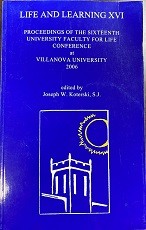
Proceedings of the Sixteenth University Faculty for Life Conference
Proceedings of the University Faculty for Life

Abstract
Despite serious challenges to the identity of Catholic health institutions in the United States, both Church and society should continue to see them as privileged places of moral discernment. This discernment occurs in “institutional conscience,” namely, a dialogue among all those authorized to act on the institution’s behalf about institutional actions, for example, medical interventions. The institutional conscience of Catholic health institutions should be respected by society at large, leaving them free to practice Christian healing and to show the problems with certain practices that they reject, such as abortion, and to seek alternatives.


Brown GT. Institutional Conscience and Catholic Health Care. In: Koterski JW editors. Proceedings of the 16th University Faculty for Life Conference at Villanova University. 2006;413-422.

The Growing Abuse of Conscientious Objection

Rebecca J Cook, Bernard M Dickens

American Medical Association Journal of Ethics

Extract
Religious initiatives to propose, legislate, and enforce laws that protect denial of care or assistance to patients, (almost invariably women in need), and bar their right of access to lawful health services, are abuses of conscientious objection clauses that aggravate public divisiveness and bring unjustified criticism toward more mainstream religious beliefs. Physicians who abuse the right to conscientious objection and fail to refer patients to nonobjecting colleagues are not fulfilling their profession’s covenant with society.


Cook RJ, Dickens BM. The Growing Abuse of Conscientious Objection. Am Med Ass J Ethics. 2006 May;8(5):337-340.

An Essential Prescription: Why Pharmacist-Inclusive Conscience Clauses are Necessary

Brian P Knestout

Journal of Contemporary Health Law and Policy

Extract
Conclusion

. . . The only solution to this dilemma may be the solution that the APhA suggested, namely, to endorse a conscience clause, but simultaneously require pharmacists to refer a valid prescription to another service provider. Those members of the profession who bear the burden of this course of action are those who believe that a referral is equivalent to the act itself. However, such a view safeguards most of the ethical goals of pharmacists while simultaneously serving the public need for effective provision of legally prescribed drugs.


Knestout BP. An Essential Prescription: Why Pharmacist-Inclusive Conscience Clauses are Necessary. J Contemp Health Law Pol. 2006 Spring;22(2):349-382.

On the impermissibility of euthanasia in Catholic healthcare organizations

Ana S Iltis

Christian Bioethics
Christian Bioethics

Abstract
Roman Catholic healthcare institutions in the United States face a number of threats to the integrity of their missions, including the increasing religious and moral pluralism of society and the financial crisis many organizations face. These organizations in the United States often have fought fervently to avoid being obligated to provide interventions they deem intrinsically immoral, such as abortion. Such institutions no doubt have made numerous accommodations and changes in how they operate in response to the growing pluralism of our society, but they have resisted crossing certain lines and providing particular interventions deemed objectively wrong. Catholic hospitals in Belgium have responded differently to pluralism. In response to a growing diversity of moral views and to the Belgian Act of Euthanasia of 2002, Catholic hospitals in Belgium now engage in euthanasia. This essay examines a defense that has been offered of this practice of euthanasia in Catholic hospitals and argues that it is misguided.


Iltis AS. On the impermissibility of euthanasia in Catholic healthcare organizations. Christ Bioet. 2006;12(3):281-290.

Conscience Clauses for Pharmacists: The Struggle to Balance Conscience Rights with the Rights of Patients and Institutions

Matthew White

Wisconsin Law Review

Abstract
Conclusion

. . .The patchwork of current conscience protection for pharmacists indisputably fails its purpose-in almost all cases the current legislation is severely one-sided and out of date. Although such conscience protection admirably attempts to embody the purposes of the First Amendment, most of the actual and proposed legislation suffers from severe partisan myopia. Statutes purporting to offer absolute protection to patients, to employers, or to health care providers rather than striking a balance tend to prolong and enlarge conflict rather than resolve it. . .

Patients, pharmacists, and employers all have civil rights implicated in the delicate interactions that surround the use of oral contraception, and decisive action should be taken to enact statutes that protect the rights of each, rather than statutes that protect one group exclusively. Legislators should make a painstaking effort to craft new conscience legislation that protects the conscience rights of pharmacists without inserting the pharmacist between the patient and her doctor. Such legislation should also make some provision for employers that would be substantially burdened by an inability to conduct their business in the event of a bona fide conscience claim.


White M. Conscience Clauses for Pharmacists: The Struggle to Balance Conscience Rights with the Rights of Patients and Institutions. Wisc Law Rev. 2005;6(1611-1648.

Un aspect crucial mais délicat des libertés de conscience et de religion des articles 2 et 3 des Chartes canadienne et québécoise: l’objection de conscience

Henri Brun

Les Cahiers de Droit

Abstract
The Supreme Court of Canada, obiter, in the Big M Drug Mart Case, has spoken of the “Constitutional Exemption”. It is the possibility not to be bound to obey the neutral laws that conflict with one’s conscience or religion. It is what we call in French l’objection de conscience. The institution exists in Canadian and Québec Law as a part of the right to freedom of conscience or religion expressed in 2a) and 3 of the Canadian and Québec Charters of Rights. And it goes well beyond the right not to fight within the armed forces. The Supreme Court of Canada has actually delivered six judgments touching on the subject in 1985 and 1986. The conditions under which l’objection de conscience come into play are not so well known however. Does it cover matters of worship or only rules of morals ? Secular or only religious principles ? Personal or only group beliefs ? Do the existence of the rule, the sincerity of the objector and the reasonableness of the exemption have to be proved? Above all, what is the difference between a creed and an opinion ? The following article tries to formulate answers to these questions, with the help of current case-law.


Brun H. Un aspect crucial mais délicat des libertés de conscience et de religion des articles 2 et 3 des Chartes canadienne et québécoise: l’objection de conscience. Les Cahiers de Droit. 1987;28(1):185-205.